Module 1 - AI Usage Ethics
Introduction to AI Usage Ethics
Overview
Artificial intelligence (AI) influences many aspects of society. As developers and users, we must ensure our AI systems behave ethically. AI usage ethics is about aligning AI systems with human values such as fairness, accountability, transparency, privacy and safety.
Why Ethics Matter
- Impact on individuals and society – AI decisions can affect access to resources, opportunities and rights.
- Trust and adoption – Ethical AI fosters public trust and supports sustainable adoption.
- Legal and regulatory compliance – Adhering to ethical principles helps meet emerging regulations.
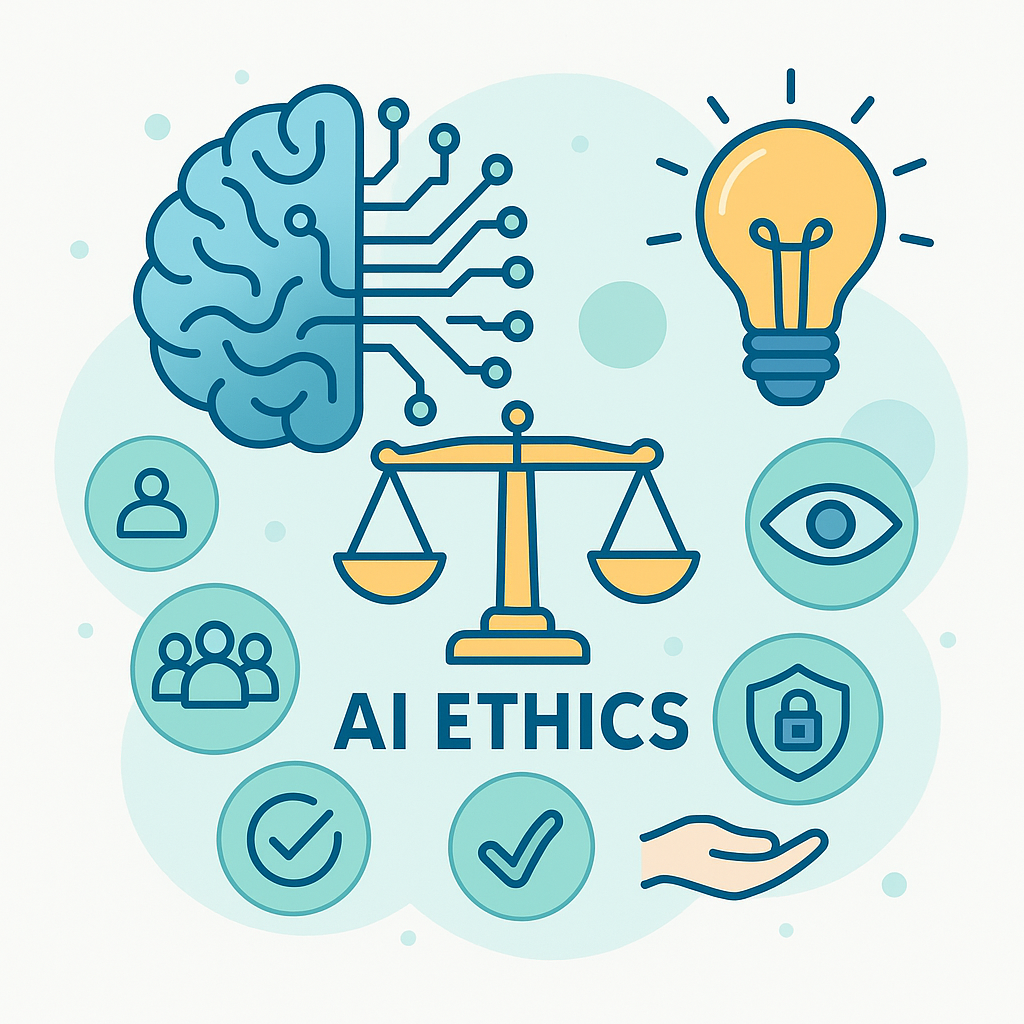 Figure: An infographic illustrating key AI ethics principles such as fairness, accountability, transparency, privacy, and safety.
Principles and Guidelines for AI Usage

Figure: A diagram summarizing key AI ethics principles, emphasising fairness, accountability, privacy, and safety.
Principles and Guidelines
Fairness and non-discrimination
AI systems should be designed and operated to avoid unfair bias and discrimination.
- Train models on diverse and representative data.
- Regularly audit outcomes to identify and mitigate biases.
Transparency and explainability
Explain AI decisions in understandable terms.
- Provide clear documentation about the system's purpose and limitations.
- Offer users accessible explanations for automated decisions.
Accountability
Define who is responsible for AI system outcomes.
- Assign roles and responsibilities for oversight.
- Establish processes for addressing harm caused by AI systems.
Privacy and data governance
Respect user privacy and use data responsibly.
- Collect only necessary data and obtain consent.
- Implement robust security measures to protect data.
Safety and robustness
Ensure AI systems operate reliably and safely.
- Test systems extensively to prevent unexpected behavior.
- Include fail‑safe mechanisms to handle errors or misuse.